If you spent July actually running services rather than reading circulars, fair enough. It was one of the busiest months for scheme rules in years, and a few of the changes bite immediately. Here is what happened, what it means on the ground, and the dates worth circling for the rest of 2026.
The price guide grew up and split into three
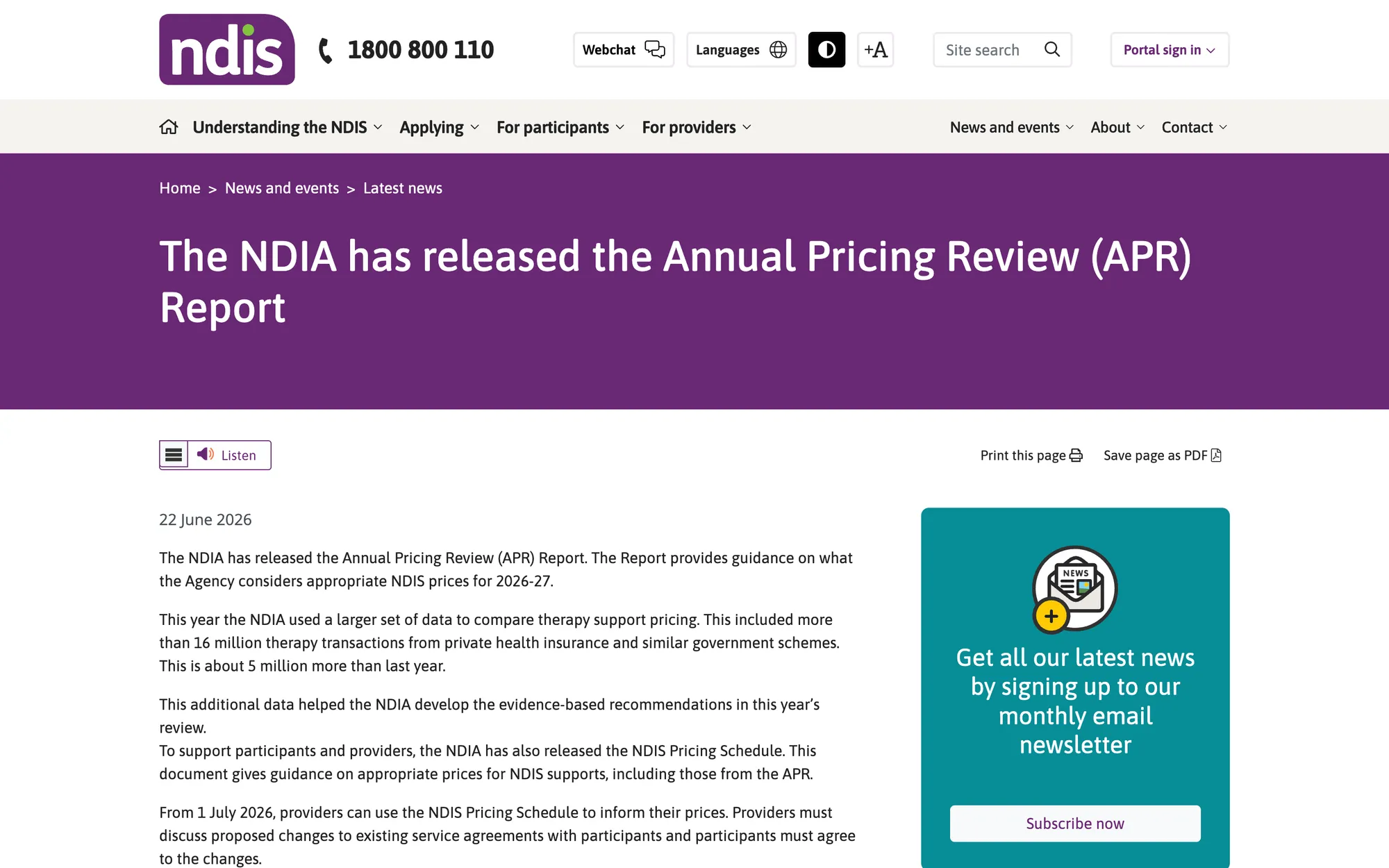
The Pricing Arrangements and Price Limits document, the PAPL that the sector has worked from for years, is gone. For 2026-27 the NDIA publishes three things instead: an Annual Pricing Review report (opens in a new tab) explaining the reasoning, a Pricing Schedule holding the price limits, and a Support Catalogue listing every claimable item. The APR landed on 22 June and the new prices apply to services delivered from 1 July 2026.
The headline moves, from the published schedule:
- The standard weekday daytime support worker price limit rose about 3.95 per cent to $70.23 an hour, driven by the updated disability support worker cost model.
- Psychology went up: $232.99 to $252.99 an hour. Dietetics went the other way, $188.99 down to $178.99, and exercise physiology eased to $161.99.
- Short Term Accommodation was restructured, with an accommodation component aligned to the Medium Term Accommodation rate of $158.66, and the old ratio-based STA items removed.
- Remote and Very Remote loadings were updated, and the isolated-towns travel lists changed shape, including a new list where travel is negotiated directly with participants.
- All up, 33 support items were added and 25 removed.
One important catch: the rules half of the old PAPL, the part covering things like cancellations, travel and non-face-to-face time in detail, had not been republished by the end of July. Until it lands, the 2025-26 PAPL rules carry forward. So you are pricing from a 2026-27 schedule while operating under 2025-26 rules. Keep both bookmarked: the pricing arrangements page (opens in a new tab) has the current set.
If you have agreements that reference old rates, this is your prompt to reissue them. The NDIA was explicit that providers must discuss proposed price changes with participants and get agreement, not just start claiming the new caps.
Allied health extras became their own line items
Buried in the new Support Catalogue is a structural change that caused real claiming pain in July. Cancellations, non-face-to-face time, provider travel, NDIA-requested reports and the new telehealth claim type are no longer claim-type variations of a therapy item. Each is now a separate support item with its own suffix, and the item numbers were revised again mid-July to match version 1.1 of the catalogue.
The transition was not smooth. Early in the month, entering a claim type against the new modifier items caused rejections in PACE with a “not allowed for this claim type selection” error, and the guidance settled on submitting them as standard service claims with the claim type left blank. If you had allied health claims bounce in the first half of July, they are worth resubmitting rather than writing off.
This sits alongside a longer game: from July the agency began a phased uplift of its claims and payments systems, heading toward real-time digital payments with evidence attached to every claim. That rollout runs to 2030, so nothing to action yet, but the direction is clear: cleaner claims, better records, less tolerance for the vague ones.
SIL without registration is now a criminal offence
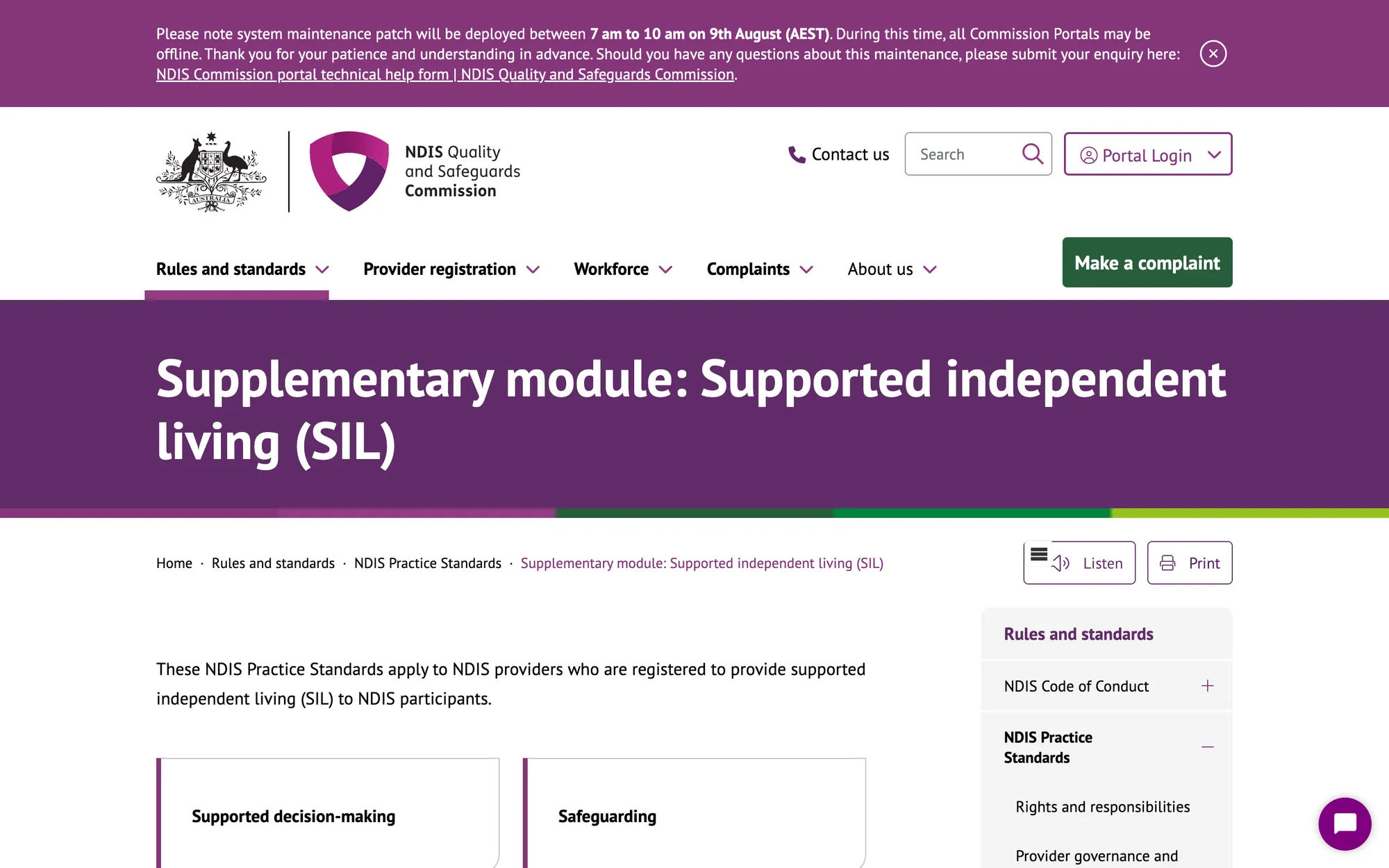
The first wave of mandatory registration arrived on 1 July. Supported independent living providers and platform providers must now be registered with the NDIS Quality and Safeguards Commission. SIL got its own registration group, 0138, replacing the old 0115, and a new SIL supplementary module (opens in a new tab) of the Practice Standards commenced the same day, built around supported decision-making, safety, workforce competence and consistency, and housing and support security.
If you deliver SIL and are not registered, you are not immediately out of business: providers already delivering supports can keep operating through the transition, but only if they apply for registration by 1 October 2026. Certification audits routinely take eight to twelve months, so an application lodged in September is a 2027 registration. Starting the self-assessment now is not caution, it is arithmetic.
The enforcement backdrop changed too. The Integrity and Safeguarding Act, which took effect earlier this year, made providing high-risk supports like SIL without registration a criminal offence carrying up to five years imprisonment, and lifted the ceiling on civil penalties for serious Code of Conduct breaches to around $3.6 million per contravention. The Commission’s compliance register shows the tempo: 38 compliance actions in June alone, 33 of them banning orders, and the orders kept coming through July. The register is public (opens in a new tab) and searchable.
Wages went up 4.75 per cent, and it is already payable
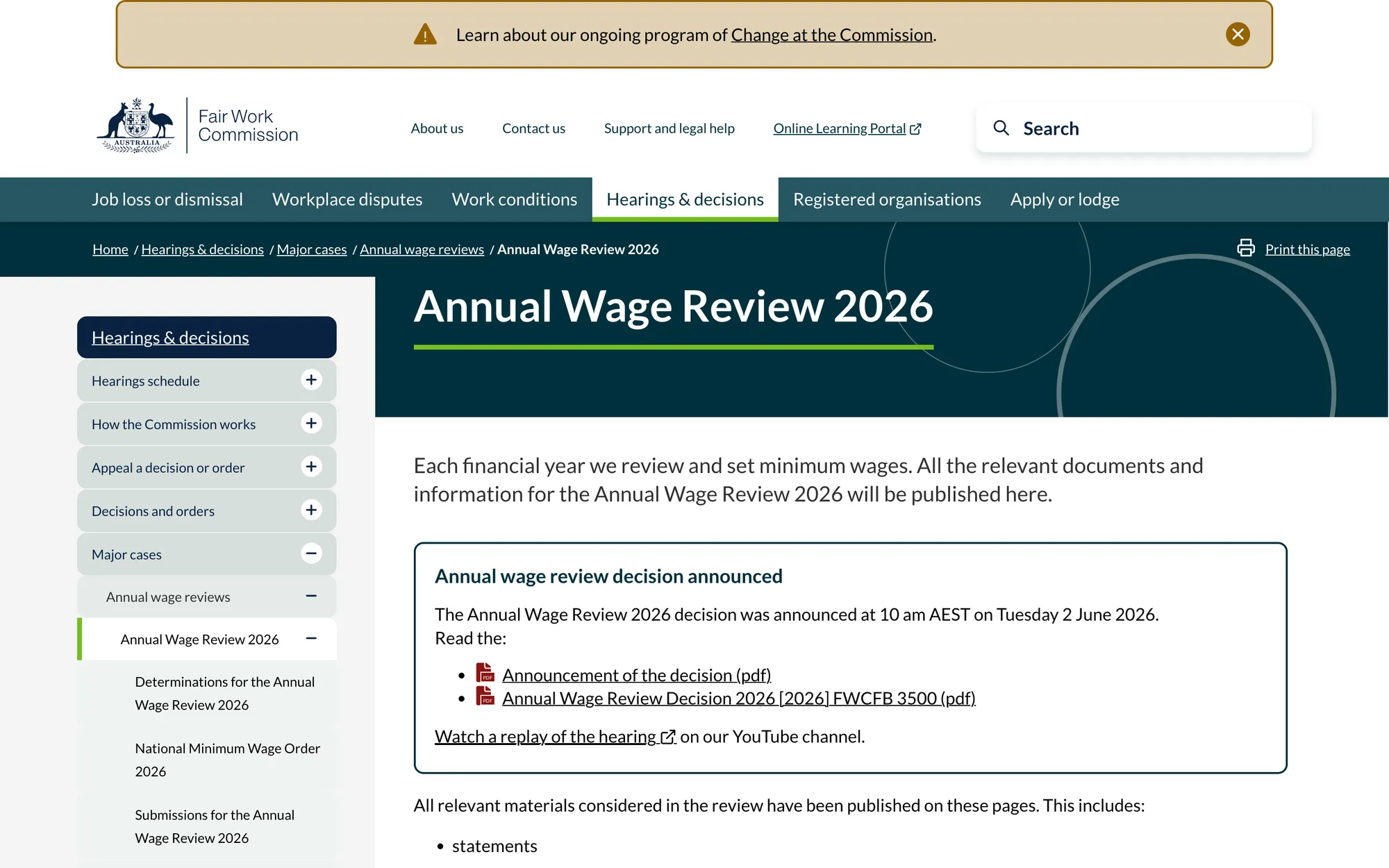
The Fair Work Commission’s annual wage review, announced on 2 June, lifted all modern award minimum rates by 4.75 per cent from the first full pay period on or after 1 July 2026. Every SCHADS classification moved, and the national minimum wage rose about six per cent.
By now every pay run you finalise should be on the new rates. If your first July run went out on the old ones, that is back pay owed, not a rounding error, and it is cheaper to fix in August than to explain later. The same wage decision flowed through the disability support worker cost model into the new price caps, which is why the caps moved roughly in step. The margin between the two did not get any wider, which makes accurate award interpretation, penalties, overtime and allowances included, the difference between a viable roster and a quietly loss-making one. Details on the FWC decision page (opens in a new tab).
Canberra kept drafting
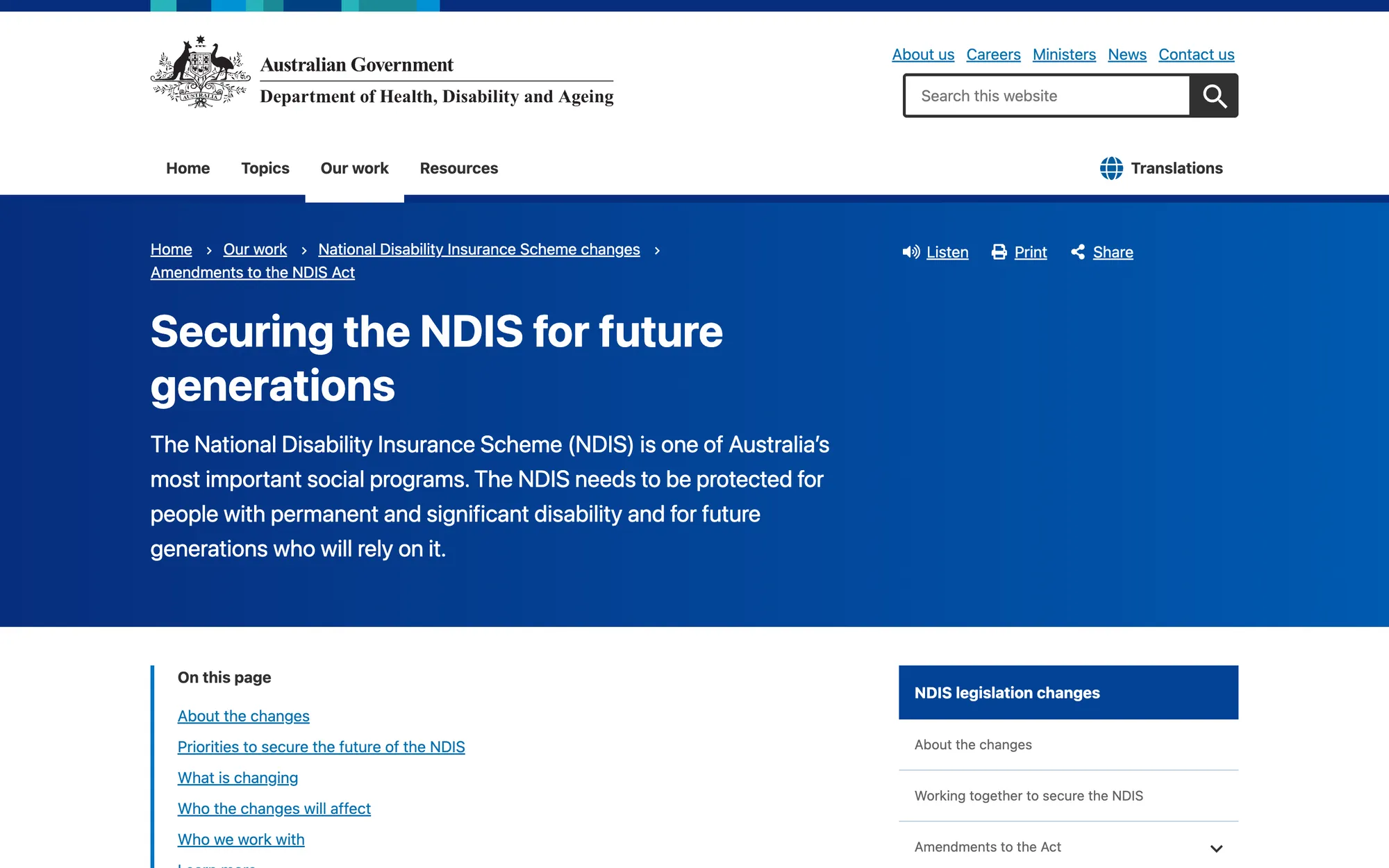
The National Disability Insurance Scheme Amendment (Securing the NDIS for Future Generations) Bill, introduced in May, spent July gathering momentum rather than passing. Two things actually happened: the government opened consultation on how home and living supports will be commissioned, and stood up a technical advisory group to design the new needs-based eligibility process.
None of it is law yet, but the drafting signals dates you will want on a whiteboard: a 90-day claiming window is slated for 1 December 2026, a new plan management approach from October 2027, and commissioned support coordination from mid-2028. The department's overview (opens in a new tab) and the Bill's parliamentary page (opens in a new tab) are the ones to watch. If 90-day claiming becomes law, the providers who suffer will be the ones still invoicing off spreadsheets a quarter in arrears.
Circle these dates
- Early August: the Q4 quarterly report is due out, with the first full-year picture of scheme growth under the reforms. The quarterly reports page (opens in a new tab) is where it lands.
- Still pending: the 2026-27 pricing rules document. Until then, 2025-26 PAPL rules apply.
- 1 October 2026: last day for existing unregistered SIL providers to apply for registration and keep operating.
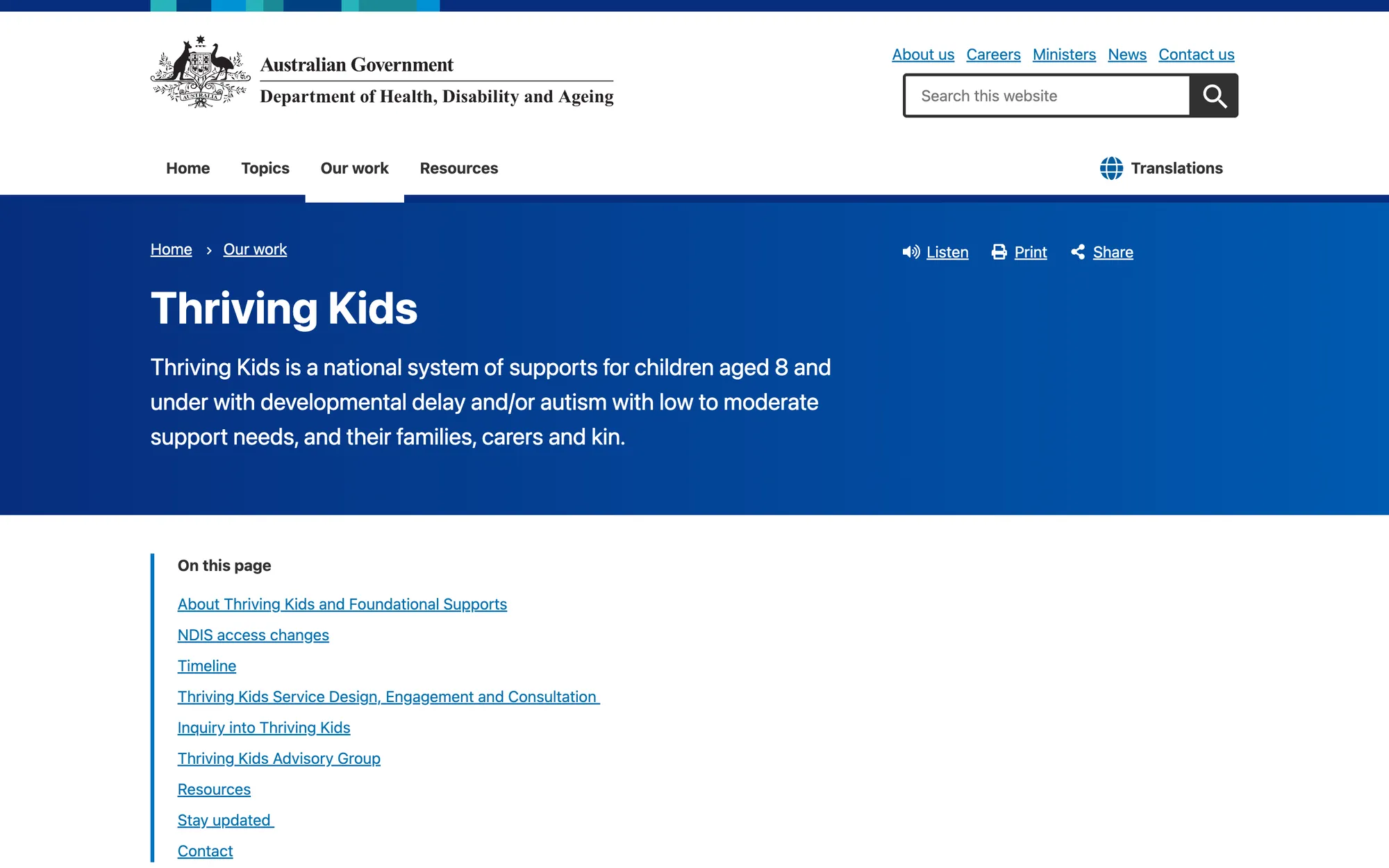
- 1 October 2026: Thriving Kids begins for children aged 8 and under with developmental delay or autism and low to moderate support needs, the first slice of foundational supports moving outside individual NDIS plans. Providers working in early childhood should read the program page (opens in a new tab) now, not in September.
- 1 December 2026: the proposed start of the 90-day claiming window, if the Bill passes as drafted.
Where OneForce Care fits
A short word on our end, because July is exactly the kind of month this platform is built for. The 2026-27 price limits and the new Support Catalogue items, including the 0138 SIL group, were live in OneForce Care from 1 July, so shifts delivered in July priced themselves at the new caps without anyone retyping a rate card. Payroll interprets the SCHADS award on current rates each week, and cancellation and travel charging follow the current arrangements, which right now means the carried-forward 2025-26 rules.
If your July involved a spreadsheet, a highlighter and the old price guide open in another tab, that is worth a conversation.